



In today’s digital age, finding ways to save time and streamline repetitive tasks is more important than ever. That’s where web automation comes in. Whether you’re running a small business, managing a marketing team, or simply trying to stay organized, automation tools can help you work more efficiently and effectively.
What is Web Automation?
At its core, web automation is about using software to handle tasks online that would otherwise require manual input. These tasks can range from filling out online forms and updating spreadsheets to syncing information between platforms or even running complex workflows.
Imagine having a reliable assistant who performs these tasks exactly when needed, without breaks or reminders—that’s what automation tools do.
Common Use Cases of Web Automation
Here are just a few ways people and businesses are already using web automation every day:
- Automatically posting to social media platforms like LinkedIn and Instagram
- Sending personalized email campaigns or auto-responses
- Collecting and organizing form submissions
- Answering customer queries using smart chatbots
- Managing online stores by updating inventory or tracking orders
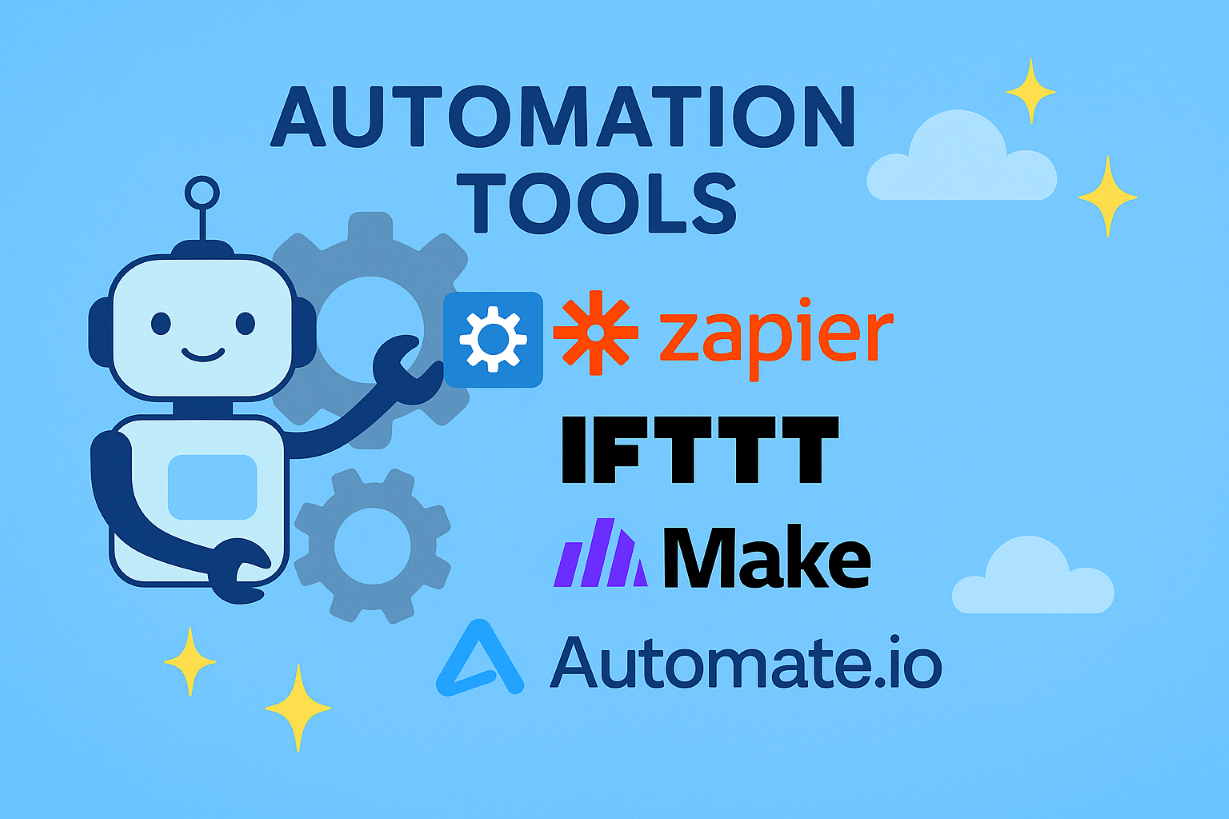
Popular Automation Tools
There are several well-known tools available today that make web automation accessible, even for non-technical users:
1. Zapier
Zapier is one of the most trusted automation platforms, connecting thousands of apps together. You can set up “Zaps”—simple workflows that get triggered by events like a new email, form submission, or calendar booking.
2. Make (formerly Integromat)
Make is a flexible visual automation tool that gives you more control over your workflows. It’s great if you want to set conditions, add branching logic, or automate more advanced processes.
3. IFTTT (If This Then That)
IFTTT is perfect for smaller, everyday automations like syncing calendar events or backing up photos. It’s beginner-friendly and works well with smart devices too.
4. UiPath
UiPath is used primarily by companies for robotic process automation (RPA), handling data entry, invoice processing, and other repetitive back-office work.
5. Bardeen and Browser-Based Tools
Browser extensions like Bardeen help you automate things directly from your browser—such as scraping web data or autofilling repetitive forms.
The Rise of AI Agents in Automation
A newer wave of automation is being driven by AI-powered agents. These tools use machine learning and natural language processing to understand tasks more deeply and carry them out with minimal instruction.
What Are AI Agents?
Think of AI agents as more intelligent assistants. They can summarize documents, draft emails, generate reports, and even plan out multi-step projects. Instead of setting up rules, you often just tell them what you want in plain language.
Examples of AI-Powered Automation Tools
- AI agents built with GPT technology that can analyze or generate content
- AutoGPT and AgentGPT that perform complex, ongoing workflows
- Taskade AI, which offers productivity tools with smart suggestions
- Platforms like Flowise or Relevance AI that build workflows from a prompt
Benefits of Web Automation
Web automation can be a game changer, especially for businesses. Some of the key benefits include:
- Freeing up time for high-priority tasks
- Reducing manual errors and inconsistencies
- Improving overall team productivity
- Allowing 24/7 execution of important processes
- Scaling operations without needing extra hands
Benefits of Web Automation for Companies
For companies of any size, the benefits are even more strategic:
- Cost Savings: Automation reduces the hours spent on manual labor, lowering operational expenses.
- Resource Efficiency: Teams can dedicate more time to creativity, strategy, and customer relationships.
- Faster Workflows: What used to take hours can now be done in minutes.
- Consistency: Automation ensures tasks are done the same way every time, improving accuracy.
- Growth Readiness: Automated systems scale easily as business needs grow.
- Competitive Edge: Businesses that automate often respond faster and deliver better service.
Web Automation Statistics & Trends
- Research by McKinsey & Company suggests that automation can reduce business process costs by up to 30% and boost productivity by 20–25%.
- In a 2024 report, Zapier noted that 88% of small businesses say automation helps them compete with bigger players.
- Gartner estimates that by 2026, more than 80% of organizations will rely on automation or AI agents.
- Findings from UiPath highlight a post-pandemic surge in automation investment, with 61% of companies increasing their budget for RPA and AI tools.
Final Thoughts
Web automation isn’t about replacing people—it’s about helping people do their best work. Whether you’re using a platform like Zapier or experimenting with an AI assistant, automating even a few small tasks can make a big impact over time.
Start simple. Pick one routine task, automate it, and watch how much smoother your day becomes. Over time, these small changes can create a huge difference in how your team operates.
Sources
- McKinsey & Company: https://www.mckinsey.com/business-functions/mckinsey-digital/our-insights/the-case-for-digital-transformation
- Zapier Automation Survey: https://zapier.com/blog/automation-at-work-report/
- Gartner Forecast: https://www.gartner.com/en/newsroom/press-releases/2022-08-25-gartner-says-80-percent-of-organizations-will-use-rpa-or-ai-by-2026
- UiPath Industry Trends: https://www.uipath.com/blog/state-of-automation-2023